Zone A Flood Insurance Cost in Texas
8-minute read · Published July 30, 2026 · Reviewed by Mohammed Elkhalil, Texas License #2427360Quick Answer
Zone A flood insurance in Texas may cost roughly $800 to $3,000 or more per year. Actual premiums can fall below or far above that range because NFIP and private insurers consider the individual property's location, elevation, foundation, first-floor height, rebuilding cost, coverage limits, deductibles, and prior losses.
This is a broad educational estimate—not a statewide average or guaranteed quote. Zone A describes mapped flood hazard, but it does not determine the premium by itself.
Key Takeaways
- Zone A is a high-risk Special Flood Hazard Area.
- It has at least a 1% chance of flooding in any given year.
- Base Flood Elevations are generally not shown for Zone A.
- Flood insurance is usually required for federally regulated or insured mortgages.
- An elevation certificate may help provide more accurate property information, but it does not guarantee a lower rate.
Zone A is one of FEMA's high-risk flood-zone designations. It identifies an area subject to the 1%-annual-chance flood, sometimes called the base flood or 100-year flood. The term "100-year flood" does not mean flooding happens only once every 100 years.
Because detailed hydraulic analysis has not established a published Base Flood Elevation for the mapped Zone A area, insurers and property owners may need more property-specific information when evaluating risk and coverage.
Estimated Zone A Flood Insurance Cost in Texas
| Zone A Property Profile | Broad Annual Estimate | Possible Cost Direction |
|---|---|---|
| Favorable elevation and moderate replacement cost | $800–$1,500 | Lower end of many Zone A estimates |
| Typical high-risk residential property | $1,200–$3,000 | Common planning range, not a guaranteed rate |
| Low elevation, high replacement cost, prior losses, or nearby water | $3,000+ | Can be materially higher |
Actual prices may be lower or substantially higher. The ranges above are educational examples intended to explain possible pricing direction.
What Does FEMA Zone A Mean?
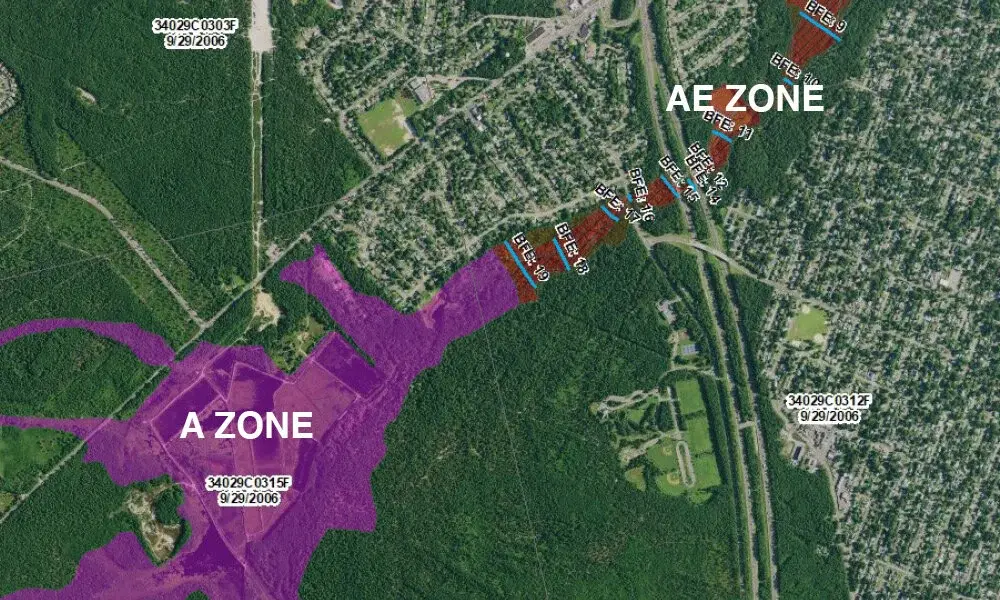
FEMA defines Zone A as an area subject to flooding from the 1%-annual-chance event that was generally mapped using approximate methods. Because detailed hydraulic studies were not completed, the flood map normally does not show a Base Flood Elevation or flood depth for this zone.
| Zone A Characteristic | What It Means |
|---|---|
| High-risk designation | It is part of the Special Flood Hazard Area. |
| 1% annual chance | There is at least a 1% chance of the mapped flood event in any year. |
| No published BFE on the map | The map generally does not show the Base Flood Elevation for that area. |
| Mandatory purchase rules | Flood insurance is generally required for federally regulated or insured mortgages. |
What Determines a Zone A Flood Insurance Premium?
NFIP pricing is unique to the property. FloodSmart explains that rates consider where the property is built, how it is built, and what it would cost to replace it.
Important factors can include:
- Distance to rivers, bayous, lakes, coastlines, and other flooding sources
- Ground elevation relative to the surrounding area
- First-floor height
- Foundation type
- Number of floors
- Building materials
- Replacement cost
- Flood frequency and type of flooding
- Coverage limits
- Building and contents deductibles
- Prior flood claims
- Community Rating System discounts
Is Flood Insurance Required in Zone A?
Flood insurance is generally required when a building in Zone A secures a mortgage from a federally regulated or insured lender. The lender will usually require enough building coverage to satisfy applicable federal rules and the loan agreement.
A lender may require:
- Continuous flood insurance throughout the loan
- The mortgage company listed correctly
- A minimum building limit
- A deductible within the lender's guidelines
- Evidence of renewal
- An NFIP or qualifying private flood policy
Important
The lender's required amount may not equal the amount needed to rebuild the home. Property owners should evaluate lender compliance and financial protection separately.
Zone A vs. Zone AE
| Feature | Zone A | Zone AE |
|---|---|---|
| Risk designation | High risk | High risk |
| 1%-annual-chance flood area | Yes | Yes |
| Detailed study | Generally approximate methods | Detailed methods |
| Base Flood Elevation shown | Generally no | Yes |
| Lender requirement | Generally applies | Generally applies |
| Automatically more expensive? | No | No |
Zone A is not automatically more expensive than Zone AE. Modern NFIP pricing considers property-level characteristics, so two high-risk properties can receive very different premiums.
Can an Elevation Certificate Help in Zone A?
An elevation certificate documents important information about the building and its elevation. It may help:
- Provide more accurate building-elevation information
- Support NFIP or private underwriting
- Clarify first-floor height and foundation details
- Support certain map-change requests
- Evaluate mitigation opportunities
It does not automatically reduce the rate. The value depends on what the certificate shows and how the insurer uses the information.
NFIP vs. Private Flood Insurance in Zone A
| Feature | NFIP | Private Flood |
|---|---|---|
| Availability | Available in participating communities under NFIP rules | Varies by carrier and property |
| Residential building limit | Generally up to $250,000 | May offer higher limits |
| Residential contents limit | Generally up to $100,000 | May offer higher limits |
| Additional living expense | Not included in the standard NFIP dwelling policy | May be available |
| Waiting period | Usually 30 days, with exceptions | Varies by carrier |
| Lender acceptance | Widely accepted | Often accepted if it meets applicable requirements |
Private flood insurance may be competitive for some Zone A properties, but other properties may receive limited options or higher pricing. The comparison should use similar coverage limits, deductibles, valuation provisions, and exclusions.
How Coverage Limits Affect Zone A Cost
| Coverage Choice | Likely Premium Effect | Planning Consideration |
|---|---|---|
| Higher building limit | Usually increases premium | Consider rebuilding cost and lender requirement |
| Add contents coverage | Increases premium | Building coverage does not protect all personal belongings |
| Lower deductible | Usually increases premium | Reduces out-of-pocket cost after a covered loss |
| Higher deductible | May reduce premium | Creates greater out-of-pocket exposure |
How to Lower Zone A Flood Insurance Cost
- Compare NFIP and private flood options.
- Confirm that building details are accurate.
- Consider whether an elevation certificate would add useful information.
- Review building and contents limits separately.
- Choose deductibles you could reasonably afford after a flood.
- Elevate utilities and mechanical equipment when practical.
- Use compliant flood vents or other approved mitigation features where appropriate.
- Check whether the community participates in FEMA's Community Rating System.
- Review the flood map after updates or property improvements.
Questions to Ask About a Zone A Quote
- Is this an NFIP or private flood quote?
- What property information was used?
- Are building and contents deductibles separate?
- Is the building limit enough for the lender and rebuilding need?
- How are contents valued?
- Is additional living expense included?
- What waiting period applies?
- Does the policy meet the mortgage company's requirements?
- Would an elevation certificate change the underwriting information?
- Are there exclusions or sublimits for enclosed areas or property below an elevated floor?
Compare Zone A flood insurance options
TWFG Elkhalil Insurance can compare NFIP and available private flood options based on your Texas property, lender requirements, limits, deductibles, and building details.
Request a Flood Insurance QuoteFrequently Asked Questions
How much does Zone A flood insurance cost in Texas?
Zone A flood insurance may broadly cost around $800 to $3,000 or more per year. Actual pricing depends on the individual property, coverage, deductibles, elevation, rebuilding cost, distance to water, and prior losses.
Is Zone A considered a high-risk flood zone?
Yes. Zone A is a Special Flood Hazard Area with at least a 1% annual chance of flooding.
Is flood insurance required in Zone A?
It is generally required when the building secures a federally regulated or insured mortgage. A lender may impose additional requirements under the loan agreement.
Does Zone A have a Base Flood Elevation?
A Base Flood Elevation is generally not shown for Zone A because the area was mapped using approximate methods rather than a detailed hydraulic study.
Is Zone A more expensive than Zone AE?
Not necessarily. Both are high-risk zones, and current pricing considers multiple property-level risk factors rather than the zone label alone.
Will an elevation certificate lower my Zone A premium?
Not automatically. It may provide more accurate building and elevation information, but the premium depends on what the certificate shows and the insurer's rating method.
Can I buy private flood insurance in Zone A?
Possibly. Availability varies by carrier, location, elevation, building characteristics, prior losses, and underwriting rules.
Does homeowners insurance cover flooding in Zone A?
Most homeowners policies do not cover rising water, surface flooding, or storm surge. Separate flood insurance is generally needed.
Official Sources
- FEMA: Zone A definition
- National Flood Insurance Program: Understanding flood risk
- National Flood Insurance Program: Flood zones and pricing
- National Flood Insurance Program: Coverage and rates
- Texas Department of Insurance: Flood insurance
Published July 30, 2026. Flood maps, zone designations, pricing, coverage, underwriting, lender requirements, and availability can change. Cost ranges are broad educational estimates and are not guaranteed quotes. This article does not alter, extend, or guarantee coverage.