
Collision vs. Comprehensive Insurance: What's the Difference? | TWFG Elkhalil Insurance
Collision covers impact damage. Comprehensive covers hail, theft, flood, and fire. Learn the difference, what Houston drivers need, and when dropping coverage costs more than keeping it.
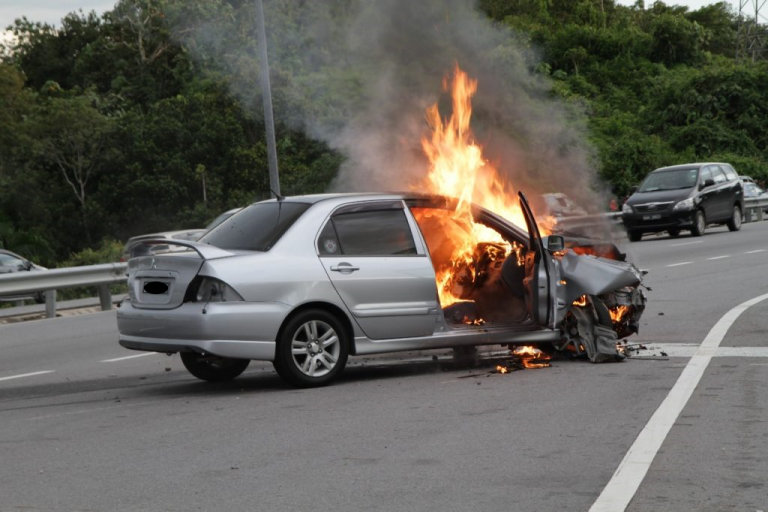
Collision vs. Comprehensive Insurance: What's the Difference?
⏱ 8 min read · Last updated: May 2026 · Reviewed by Mohammed Elkhalil, Texas License #2427360 · Sources: Texas Department of Insurance, Insurance Information InstituteQuick Answer
Collision insurance covers damage to your vehicle when it hits or is hit by another vehicle or object — regardless of fault. Comprehensive insurance covers damage from everything else: hail, theft, flood, fire, wind, vandalism, and animal strikes. Both pay up to your vehicle's actual cash value minus your deductible. Texas does not require either — but lenders do, and Houston's hail and flood exposure make both strongly advisable for most drivers.
🚗 Collision Covers
- You rear-end another car
- Another car runs a red light and hits you
- You hit a guardrail, pole, or curb
- You back into an object in a parking lot
- Single-car rollover accident
🌪️ Comprehensive Covers
- Hail damage
- Flood damage to your vehicle
- Theft of your vehicle
- Fire, explosion, or vandalism
- Animal strikes (deer, dog)
- Falling objects (tree limbs, debris)
- Wind and tornado damage
Key Takeaways
- Collision covers damage from hitting or being hit by a vehicle or object. Comprehensive covers damage from everything else — hail, theft, flood, fire, animals, and weather events.
- Texas law does not require collision or comprehensive — only liability is mandated. But lenders require both on financed vehicles, and Houston's severe weather profile makes comprehensive especially important.
- A single hail storm in Houston can total a vehicle. Without comprehensive, the full replacement cost falls on the driver. The greater Houston area is one of the most hail-active metro areas in the country.
- Comprehensive auto insurance covers flood damage to your vehicle — which homeowners or renters insurance does not. Houston drivers with vehicles parked outdoors during storm events need comprehensive, not a flood policy, to cover their car.
- Adding both collision and comprehensive to a liability-only policy typically costs $800–$1,800 per year in Texas — a fraction of the replacement cost of most vehicles.
Collision and comprehensive are the two physical damage coverages in a standard Texas auto insurance policy — and confusing them is one of the most common reasons drivers end up with unexpected out-of-pocket costs after a vehicle loss. The distinction is straightforward: collision covers damage from impact with another vehicle or object; comprehensive covers damage from everything else.
This guide applies to Texas drivers across all vehicle types and driving situations, with specific examples from Houston and surrounding areas — Katy, Cypress, Sugar Land, Pearland, The Woodlands, Friendswood, League City, and Baytown — where TWFG Elkhalil Insurance works with many personal auto clients. As a Houston-based independent broker who reviews auto policies regularly, the most common gap I see is drivers who carry collision but have removed comprehensive to save money — in a city where a single hail storm can total a vehicle.
"In Houston, dropping comprehensive to save $200 per year is a bet that your car won't be hailed on, stolen, or flooded. Given what Harvey did to vehicles in this city, and given that the Houston area sees significant hail events nearly every spring, that's a bet I wouldn't make on a vehicle worth more than $8,000. The math almost never favors dropping comprehensive in this market."
— Mohammed Elkhalil, Independent Insurance Broker, TWFG Elkhalil Insurance · Texas License #2427360In This Guide
- What is collision insurance?
- What is comprehensive insurance?
- The key difference between collision and comprehensive — with examples
- Does Texas require collision or comprehensive?
- Should Texas drivers carry collision and comprehensive?
- Why comprehensive is especially important in Houston
- Does comprehensive cover flood damage to your vehicle?
- How much do collision and comprehensive cost in Texas?
- How to choose the right deductible
- Real Houston case study: hail totaled vehicle, no comprehensive
- When it may make sense to drop collision or comprehensive
- Frequently asked questions
What Is Collision Insurance?
Collision insurance covers physical damage to your vehicle that results from an impact with another vehicle or with a stationary object — regardless of which driver was at fault for the accident.
What collision insurance pays for
Collision pays to repair your vehicle after a covered impact event, or to pay you the actual cash value (ACV) of your vehicle if the damage exceeds the cost to repair it — a total loss. The payment is your vehicle's ACV minus your deductible.
Specific events covered by collision
- You rear-end another vehicle at an intersection
- Another driver runs a red light and strikes your car
- You hit a guardrail, highway barrier, or median
- You strike a curb or pothole and damage your wheel and suspension
- You back into a parking structure column or another parked car
- Your vehicle rolls over in a single-car accident
- Your vehicle is hit while parked by a hit-and-run driver
Why fault doesn't determine collision coverage
Collision pays regardless of who caused the accident. If another driver hits you and has liability insurance, their liability coverage should pay for your vehicle damage — but if they are uninsured, underinsured, or disputed fault delays their insurer's payment, your collision coverage pays your repair cost immediately (minus your deductible) and your insurer pursues recovery from the at-fault party. This is the primary practical value of collision for Texas drivers, given the state's approximately 1 in 5 uninsured driver rate.
What Is Comprehensive Insurance?
Comprehensive insurance covers physical damage to your vehicle from causes other than a collision with another vehicle or object. It is sometimes described as "other than collision" coverage and covers a wide range of loss events — most of which are outside the driver's control.
Specific events covered by comprehensive
- Hail damage: the most common comprehensive claim in the greater Houston area
- Flood damage: water entering the vehicle from rising water, storm surge, or overland flooding
- Theft: the entire vehicle is stolen
- Vandalism: intentional damage by a third party — keying, broken windows, spray paint
- Fire or explosion: vehicle fire regardless of cause, unless arson by the insured
- Wind and tornado damage: damage from high winds, a tornado, or a hurricane
- Falling objects: tree limbs, construction debris, or other objects that fall onto the vehicle
- Animal strikes: hitting a deer, dog, or other animal — classified as comprehensive, not collision
- Broken windshield from road debris: a rock chip or crack from a flying object
What comprehensive pays
Like collision, comprehensive pays the actual cash value of your vehicle minus your deductible on a total loss, or the cost of repairs on a partial loss up to ACV. Some policies offer windshield repair or replacement with no deductible — confirm this with your broker when reviewing your policy.
The Key Difference Between Collision and Comprehensive — With Examples
The single clearest way to distinguish collision from comprehensive: collision covers damage from your vehicle contacting another object. Comprehensive covers damage that happens to your vehicle without contact — or from contact with an animal.
| Loss Event | Collision or Comprehensive? | Why |
|---|---|---|
| You rear-end another car | Collision | Your vehicle struck another vehicle |
| Another car hits you | Collision (or their liability) | Your vehicle was struck by another vehicle |
| You hit a guardrail | Collision | Your vehicle struck a stationary object |
| Hail damages your car | Comprehensive | Non-collision weather event |
| Your car floods during a storm | Comprehensive | Non-collision water damage |
| Your car is stolen | Comprehensive | Theft — no collision event |
| You hit a deer | Comprehensive | Animal strike — classified as comprehensive in all states |
| A tree limb falls on your car | Comprehensive | Falling object — no collision |
| Your car catches fire | Comprehensive | Fire — no collision event |
| Rock chips your windshield on I-10 | Comprehensive | Falling/flying debris — no collision |
| You swerve to miss a dog and hit a fence | Collision | Your vehicle struck an object — the animal contact is irrelevant |
Does Texas Require Collision or Comprehensive?
Texas law does not require collision or comprehensive insurance. The only auto insurance Texas law requires is liability coverage — the 30/60/25 minimum ($30,000 per person / $60,000 per accident / $25,000 property damage).
When collision and comprehensive are required by lenders
If your vehicle is financed or leased, your lender or leasing company requires both collision and comprehensive as a condition of the loan. The lender has a financial interest in the vehicle — if it is totaled or stolen, they need to be repaid. Dropping collision or comprehensive on a financed vehicle without the lender's knowledge violates your loan agreement and can result in the lender force-placing coverage on the vehicle at your expense — at rates significantly higher than market.
When collision and comprehensive are optional
Once your vehicle is fully paid off, the choice to carry collision and comprehensive is yours. That decision should be based on your vehicle's current value, your financial ability to absorb an uninsured loss, and your local risk environment — not simply on the absence of a legal requirement.
Should Texas Drivers Carry Collision and Comprehensive?
For most Texas drivers, yes — particularly in the Houston market. The decision turns on four factors: vehicle value, financial resilience, local risk, and driving frequency.
Vehicle value: the 10% rule
A commonly used guideline: if the combined annual premium for collision and comprehensive exceeds 10% of your vehicle's actual cash value, the coverage may not be cost-effective on a pure expected-value basis. If your car is worth $6,000 and collision plus comprehensive costs $800/year, you're paying 13% of the vehicle's value for coverage — a tipping point worth evaluating. If your car is worth $25,000 and the combined premium is $1,200, you're paying 4.8% — clearly cost-effective.
Financial resilience: can you absorb the loss?
The correct question is not whether the coverage is statistically cost-effective — it's whether you could absorb the loss without financial hardship if your vehicle were totaled or stolen tomorrow. For most Texas households, losing a $20,000 vehicle without insurance would be a significant financial emergency. The coverage exists to prevent that.
Local risk: Houston's weather profile
Houston's weather environment makes comprehensive especially important in this specific market — more so than in most other Texas cities and far more so than in most other U.S. markets. See the dedicated section on hail and flood below.
Driving frequency: more miles, more collision risk
Houston is consistently ranked among the top five most congested cities in the United States. More driving in heavy traffic means higher probability of an at-fault or no-fault collision over the policy year. Higher driving frequency increases the expected value of collision coverage for Houston-area drivers compared to lower-mileage or rural drivers.
Why Comprehensive Is Especially Important in Houston
Houston and the greater Harris County area experience some of the most frequent and severe hail events in the country. Spring storm season — typically March through June — brings multiple significant hail events to the metro area each year. A single severe hailstorm can produce baseball-sized hail that dents every exposed metal surface of a vehicle, cracks the windshield, and causes damage that totals vehicles worth $20,000–$40,000.
Top 5
Houston consistently ranks among the top 5 U.S. metro areas for hail damage frequency — making comprehensive auto coverage one of the most financially important decisions for Texas drivers
Based on Insurance Information Institute hail loss data
What a major Houston hail event looks like financially
A large hail event affecting the northern Houston suburbs — Katy, Cypress, Spring, or The Woodlands — can generate thousands of auto insurance claims in a single afternoon. Vehicles parked outdoors at work or at home sustain dents across every horizontal panel, cracked windshields, and damaged mirrors. A vehicle sustaining $8,000 in hail damage on a car worth $14,000 is not uncommon after a significant storm. Without comprehensive, the driver pays that $8,000 entirely out of pocket.
Hail deductibles and comprehensive coverage
Most Texas comprehensive auto policies apply the standard all-perils deductible — typically $500 or $1,000 — to hail claims. Some higher-risk policies or carriers may apply a separate hail deductible, but this is less common for personal auto than for homeowners insurance. Confirm your deductible structure when reviewing your policy — particularly if you have stored a high-value vehicle outdoors.
Does Comprehensive Cover Flood Damage to Your Vehicle?
Yes — comprehensive auto insurance covers flood damage to your vehicle. This is an important distinction for Houston drivers: the flood coverage that protects your car is comprehensive auto insurance, not flood insurance for your home.
What flood damage to a vehicle looks like
If rising water during a storm enters your vehicle — whether parked in a flooded street, a parking garage, or your driveway — the water can damage the engine, electrical systems, interior, and other components. A vehicle submerged beyond a certain water line is typically declared a total loss. Comprehensive covers this loss up to your vehicle's actual cash value minus your deductible.
What your homeowners or renters insurance does not cover for your vehicle
Standard homeowners and renters insurance covers personal property — furniture, electronics, clothing — but explicitly excludes motor vehicles. A vehicle flooded during a storm is not covered under your homeowners or renters policy regardless of where it was parked. Only comprehensive auto coverage applies to vehicle flood damage.
🌊 Houston Driver Warning
During significant Houston flood events — Harvey in 2017, Tax Day flooding in 2016, and others — thousands of vehicles were flooded and declared total losses. Drivers without comprehensive received nothing from their auto insurer. Drivers with comprehensive received their vehicle's ACV minus their deductible. The deductible is typically $500–$1,000. The vehicle loss is typically $10,000–$40,000 or more. The difference in outcome comes entirely from whether the driver had comprehensive coverage at the time of the storm.
How Much Do Collision and Comprehensive Cost in Texas?
Adding both collision and comprehensive to a liability-only policy typically costs $800–$1,800 per year for most Texas drivers — though this varies significantly based on vehicle value, driver history, deductible, and location.
| Vehicle Value | Typical Annual Cost — Collision + Comprehensive | Notes |
|---|---|---|
| $8,000–$15,000 | $600–$1,000/yr | Older vehicle — consider 10% rule |
| $15,000–$25,000 | $900–$1,400/yr | Most common range for Houston drivers |
| $25,000–$40,000 | $1,200–$1,800/yr | Newer vehicle — coverage clearly cost-effective |
| $40,000+ | $1,500–$2,500+/yr | Luxury or high-performance vehicle — higher repair costs |
These ranges reflect combined collision and comprehensive premiums — the cost of each varies independently based on the driver's record and the vehicle's loss history. An independent broker can provide a specific quote for your vehicle and driving profile within 24 hours. See general ranges on our Texas insurance pricing page.
How to Choose the Right Deductible for Collision and Comprehensive
The deductible is the amount you pay out of pocket before your insurance pays on a collision or comprehensive claim. Common deductible options are $250, $500, $1,000, and $2,000. The relationship is straightforward: a higher deductible produces a lower annual premium, but increases your out-of-pocket cost when you file a claim.
The right deductible is the highest amount you could comfortably pay today
The decision framework is not about actuarial optimization — it is about financial resilience. If your car were damaged tomorrow and you had to write a check for your deductible before repairs could begin, what is the highest amount you could pay without financial strain? That amount is your right deductible. If $1,000 would be difficult but $500 would be manageable, carry a $500 deductible and pay slightly more in annual premium for the peace of mind.
Common deductible amounts and their typical premium impact
- $250 deductible: lowest out-of-pocket at claim time — highest annual premium
- $500 deductible: the most common choice — balanced premium and out-of-pocket
- $1,000 deductible: meaningfully lower premium — appropriate if you have an emergency fund
- $2,000 deductible: lowest premium — only appropriate for higher-value vehicles if you have significant liquidity
Can collision and comprehensive have different deductibles?
Yes — some Texas auto insurance policies allow you to set different deductibles for collision and comprehensive. A common choice is a $500 comprehensive deductible and a $1,000 collision deductible, reflecting that collision claims tend to be more frequent and therefore the lower deductible on comprehensive provides more value per dollar of premium savings. Ask your broker whether split deductibles are available for your policy.
Real Houston Case Study: Hail Totaled Vehicle, No Comprehensive
📋 Texas Auto Insurance Case Study — Anonymized
When It May Make Sense to Drop Collision or Comprehensive
Dropping physical damage coverage is a legitimate financial decision in specific circumstances — but it requires an honest assessment of vehicle value, financial resilience, and local risk.
When dropping collision may make sense
- Your vehicle's ACV is below $5,000–$6,000 and the combined collision premium is 10% or more of that value annually
- You have sufficient liquid savings to replace the vehicle without insurance proceeds
- You drive very low annual mileage with minimal accident exposure
When dropping comprehensive is harder to justify in Houston
In the Houston market specifically, the case for keeping comprehensive is stronger than the general 10% rule suggests — because hail and flood risk are not theoretical. A driver who drops comprehensive on a $10,000 vehicle in rural west Texas faces a very different risk environment than a Houston driver with the same vehicle parked outdoors in Katy or Spring. The frequency of comprehensive claims in Houston justifies keeping comprehensive at vehicle values where a driver in a lower-risk market might reasonably drop it.
Never drop comprehensive if
- The vehicle is financed or leased — the lender requires it
- You park outdoors in a Houston-area ZIP code during spring storm season
- You could not replace the vehicle out of pocket without financial hardship
- The vehicle is a high-value model where hail repairs alone could cost $10,000+
Not sure whether your Texas auto policy has the right collision and comprehensive coverage?
TWFG Elkhalil Insurance reviews your current auto coverage, confirms what each section covers, and compares full coverage options across multiple carriers for your vehicle and driving profile. Most quotes returned within 24 hours.
Get a Texas Auto Insurance QuoteFrequently Asked Questions
What is the difference between collision and comprehensive insurance?
Collision covers damage to your vehicle from hitting another vehicle or object — regardless of fault. Comprehensive covers damage from everything else: hail, flood, theft, fire, wind, falling objects, vandalism, and animal strikes. Both pay up to your vehicle's actual cash value minus your deductible.
Does Texas require collision and comprehensive insurance?
No — Texas only requires liability insurance (30/60/25 minimum). Collision and comprehensive are optional unless your vehicle is financed or leased, in which case your lender requires both. For paid-off vehicles, the decision is the driver's — but Houston's hail and flood environment makes comprehensive strongly advisable for most drivers.
Does comprehensive auto insurance cover hail damage in Texas?
Yes — hail damage is covered under comprehensive auto insurance. It is one of the most common comprehensive claims in the greater Houston area. Without comprehensive, hail damage — which can total a vehicle worth $20,000–$30,000 — is entirely uninsured.
Does comprehensive auto insurance cover flood damage to my car in Texas?
Yes — flood damage to your vehicle is covered under comprehensive auto insurance. Your homeowners or renters insurance does not cover your vehicle — motor vehicles are specifically excluded from homeowners policies. For Houston drivers, comprehensive is the only insurance coverage that protects your car from flood events.
If someone hits my parked car, does collision or their liability pay?
If the driver who hit your car is identified and has liability insurance, their liability coverage pays for your vehicle damage. If the driver is uninsured, unknown (hit and run), or their fault is disputed, your collision coverage pays the repair cost minus your deductible — and your insurer pursues recovery from the at-fault driver. Without collision, you pay out of pocket and pursue the other driver independently.
I have a paid-off 2020 SUV worth about $28,000 parked outdoors in Katy — should I keep full coverage including comprehensive, and what deductible makes sense?
Yes — absolutely keep comprehensive on a $28,000 SUV parked outdoors in Katy. Katy is one of the most active hail corridors in Harris County. A single hail event in this ZIP code can cause $10,000–$18,000 in damage to an SUV of that size. At $28,000 of value, the 10% rule strongly supports keeping comprehensive — the combined collision and comprehensive premium for a $28,000 SUV in the Katy market is typically $1,100–$1,500/year, well below 10% of vehicle value. For deductible: if you have $1,000 in accessible savings, a $1,000 deductible reduces your annual premium meaningfully without creating financial hardship at claim time. If $500 is a more comfortable emergency out-of-pocket number, carry the $500 deductible and pay slightly more annually. An independent broker can quote both deductible options for your specific vehicle and ZIP code within 24 hours.
Final Thoughts
Collision and comprehensive are straightforward to define once you know the rule: collision covers impact with another vehicle or object; comprehensive covers everything else. The decision to carry both in Texas is driven less by legal requirement — which demands only liability — and more by an honest assessment of what an uninsured loss would mean for your household.
In Houston specifically, where spring hail events are frequent and severe, and where flooding affects vehicles across all neighborhoods during significant storms, comprehensive is not an optional upgrade for most drivers. The case study in this guide — $18,400 in hail damage on a vehicle where $94/month of coverage had been dropped 8 months earlier — reflects a pattern that repeats every Houston storm season across thousands of uninsured vehicles.
- Car insurance in Texas — how we compare full coverage options for Houston drivers
- What does car insurance cover in Texas? — the full breakdown of all auto coverage types
- Are you paying too much for car insurance in Texas? — when and how to compare coverage at renewal
- Does homeowners insurance cover flood damage? — why your homeowners policy doesn't protect your car
- Get a Texas auto insurance quote — we compare collision and comprehensive options across multiple carriers
Keep Reading
- What Does Car Insurance Cover in Texas? The complete breakdown of liability, collision, comprehensive, and all other auto coverage types
- Are You Paying Too Much for Car Insurance in Texas? When it makes sense to compare rates — and how to do it without sacrificing coverage
- Does Homeowners Insurance Cover Flood Damage in Texas? Why homeowners insurance excludes your vehicle — and what covers it instead
- What Does Homeowners Insurance NOT Cover in Texas? Vehicles are excluded — here's everything else your homeowners policy misses
Written & Reviewed by
Mohammed Elkhalil
Independent Insurance Broker · TWFG Elkhalil Insurance · Houston, TX
Texas Insurance License #2427360
Last updated: May 2026 · Reviewed by Mohammed Elkhalil, Texas License #2427360 · Sources: Texas Department of Insurance, Insurance Information Institute
Coverage availability, policy terms, deductible options, and pricing vary by carrier, vehicle, driver profile, location, and individual circumstances. This article is for general educational purposes only and is not a substitute for reviewing your specific coverage needs with a licensed insurance professional.
Need Help Choosing the Right Coverage?
Our Texas insurance experts are ready to help you find the right policy at the right price. No pressure, just honest answers.